A Personal Classic
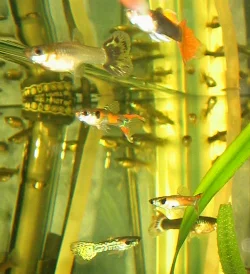
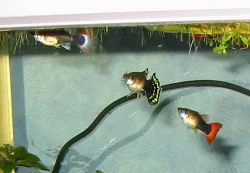
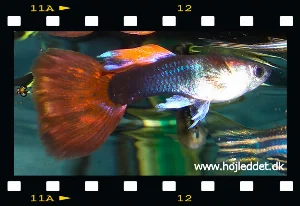
Poecilia reticulata, better known as the Guppy or Millionfish, is for many the gateway into the aquarium hobby. The nickname 'Millionfish' is no exaggeration; under the right conditions, they are incredibly prolific. As an aquarist, one quickly learns the difference between highly bred show forms and more robust, natural strains. The large, heavy-finned males often found in shops can be slow due to their extravagant finnage, whereas wild-type forms are lightning-fast and generally possess a hardier constitution.
Natural Habitat and Water Parameters
Originally originating from northern South America and Caribbean islands such as Trinidad and Tobago, guppies are extremely adaptable in the wild. They inhabit everything from fast-flowing streams to stagnant brackish coastal waters. In the aquarium, they thrive best in moderately hard water (GH 8-20) with a pH between 7.0 and 8.5. While hardy, they respond positively to a small amount of mineral salt, especially when keeping more delicate fancy varieties.
Life in the Aquarium and Behavior
Guppies are fantastic for adding movement and confidence to a tank. They often serve as 'dithering fish,' whose constant activity makes shyer species feel secure enough to venture out. In a dedicated species tank, you witness their true nature: the males' intense mating displays and complex social hierarchies. While they can survive in small setups, I recommend at least 40-54 liters to ensure stable water quality. They prefer temperatures between 22-26°C, though they can tolerate brief fluctuations.
Sourcing and Health
Unfortunately, many commercially bred guppies today are delicate due to inbreeding and rapid growth in medicated water. In my experience, it is almost always better to source locally bred fish from private hobbyists. These fish are acclimated to standard local water conditions and rarely carry the bacterial infections often associated with mass-imported specimens.
Breeding and Fry Care
The male is equipped with a gonopodium (a modified anal fin organ) used to transfer spermatophores to the female. A fascinating detail is the female's ability to store sperm (superfetation), allowing her to produce multiple broods from a single mating. A healthy female typically delivers 20-60 fry every 4 weeks. As they are active cannibals, dense planting with Taxiphyllum barbieri (Java moss) or floating plants like Pistia is essential. I advise against using small breeding traps as they cause unnecessary stress; a well-planted tank or a separate grow-out tank yields far better survival rates.
Genetics and Selective Breeding
Guppy genetics are a playground for the enthusiast. Traits like snakeskin (filigree) are often Y-linked and passed from father to son, while other characteristics like tail shape and base color can be more complex. If a colony is left without selective intervention, natural selection will eventually cause it to revert to a wild-type form. The small, agile males with shorter tails are simply more efficient at mating and evading predation than their highly ornamental counterparts.