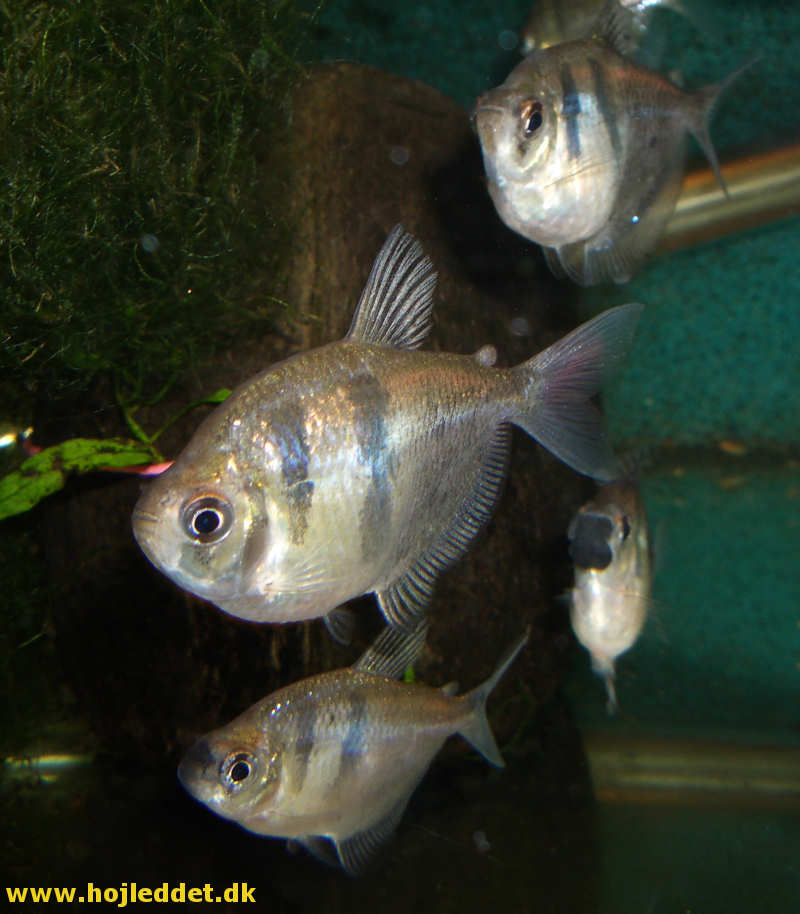

The Black Tetra (*Gymnocorymbus ternetzi*) is one of the most rewarding and hardy tetras in the hobby. It is known for its distinctive disc-shaped body and deep black fins, which earned it the name 'Black Widow Tetra'. The species originates from South America, specifically the Paraguay and Guaporé river basins, where it inhabits slow-moving waters with dense vegetation.
In the aquarium, they are lively schooling fish that should be kept in groups of at least 6-8 individuals. However, be aware that they can be notorious fin-nippers, especially toward slow-moving fish with long fins (such as Angelfish or Bettas). As they age, their intense black coloration often fades to a smoky grey, but their active nature remains unchanged.
Breeding Account
I had long wanted to attempt breeding Black Tetras, as most literature describes them as one of the easiest tetras to spawn. Below is my personal experience with the process.
Spawning
For the breeding setup, I used a 25-liter glass tank. A breeding grate (a 4 cm high frame covered in mesh) was placed at the bottom to ensure the eggs fell out of reach of the parents. Stems of Cabomba attached to a rock served as the spawning substrate.
Sexual dimorphism is clear: males are slimmer, smaller, and darker, while females are significantly more robust and filled with roe. After introducing the pair, spawning began the next morning. The fish swam into the vegetation, turned belly-up, and released the eggs. It was fascinating to observe this behavior in an egg-scattering species for the first time.
Development and Growth
The eggs hatched quickly. Within 24 hours, the tiny fry were visible clinging to the glass and plants like small splinters of glass. After about a week, I removed the grate and discovered between 100 and 200 fry.
Feeding began on the 6th day with newly hatched brine shrimp (Artemia). Although many recommend infusoria initially, the fry thrived on Artemia and supplemental microworms. They grew rapidly, developing characteristic orange bellies after every feeding. With regular water changes and thrice-daily feedings, they reached a sellable size of approximately 3 cm after 11-12 weeks.


